The Real Reason Breakaway Attempts Fail — And How to Fix Them
Several other, very helpful pieces have already been posted on this topic, so I strongly suggest my hockey friends do a quick search for “breakaway” to combine all the provided advice. With that…
Every hockey player dreams about getting a clean breakaway. There is nothing quite like stealing a puck or receiving a perfect pass that leaves you alone with the goalie. It feels like the perfect scoring opportunity. The crowd gets excited, your teammates hold their breath, and you can almost picture the puck hitting the back of the net. Yet the truth is that many breakaway attempts end with the goalie making an easy save or the shooter missing the net completely. While many players blame bad luck, the real reason most breakaways fail is much simpler than that. The good news is that it is also something you can improve with the right practice and mindset.
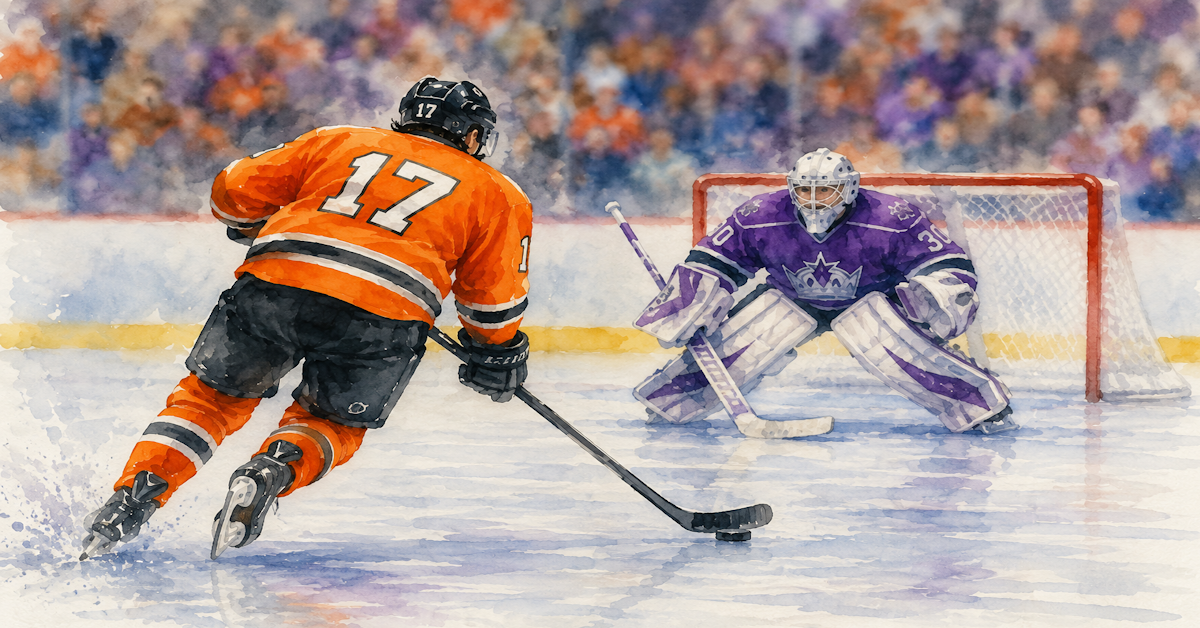
One of the biggest mistakes players make on a breakaway is deciding what move they are going to use long before they reach the goalie. They convince themselves they are going to deke, shoot high glove side, or fake a backhand move no matter what the goalie does. Hockey does not work that way. The best scorers react to what they see. They read the goalie, stay patient, and make the goalie commit first. Instead of forcing one move every time, they let the situation tell them what the best option is.
Another common reason breakaway attempts fail is skating too fast. That may sound strange because speed creates breakaways in the first place. However, once you are in alone on the goalie, being out of control actually hurts your chances. Players who are racing at top speed often lose control of the puck, rush their move, or run out of room before they can make the goalie react. Great players understand how to change speeds. They attack quickly at first, then slightly slow down as they approach the net. That small change gives them more control and forces the goalie to keep guessing.
Many young players also spend too much time staring at the puck during a breakaway. Looking down makes it much harder to see how the goalie is positioned. You cannot recognize an opening if your eyes are focused on your stick. Learning to handle the puck with your head up is one of the most valuable hockey skills you can develop. The more comfortable you become controlling the puck without watching it, the more confident you will feel when facing a goalie one-on-one.
Poor shooting decisions are another major problem. Some players think every breakaway needs a fancy highlight-reel move. Others always try to shoot as hard as possible. Neither approach works consistently. Sometimes the best play is a simple wrist shot placed accurately into an open corner. Other times a quick fake followed by a smooth finish is all that is needed. The goal is not to impress anyone. The goal is to score. Smart hockey players choose the simplest move that gives them the highest chance of success.
Confidence also plays a much bigger role than most players realize. Many players begin thinking about missing before they even reach the goalie. They worry about letting down their teammates or embarrassing themselves if they fail. Those negative thoughts create tension, and tense players rarely perform at their best. The best shooters stay calm and focus only on the next decision. They understand that even the greatest NHL players miss plenty of breakaways. Missing one opportunity does not define you as a player.
Practice habits matter just as much as game situations. Too many players only practice breakaways at the end of practice when everyone is tired and simply taking turns shooting. That is better than nothing, but it does not prepare you for real games. Instead, practice breakaways at different speeds. Start from different areas of the ice. Work on shooting without making a move. Practice making one simple fake before shooting. Challenge yourself to read the goalie’s position instead of following the same routine every time. These small adjustments help build real game skills instead of predictable habits.
It also helps to study great goal scorers. Watch how they approach the goalie. Notice how patient they remain. Pay attention to how often they keep their head up instead of looking down at the puck. You will quickly discover that many successful breakaways are surprisingly simple. Elite players rely on timing, control, and smart decisions much more than flashy stickhandling.
Coaches and parents should remember that confidence grows through encouragement, not criticism. If a young player misses a breakaway, resist the urge to immediately explain everything they did wrong. Instead, ask what they noticed about the goalie. Encourage them to think through the play and learn from it. Developing hockey IQ is just as important as developing stickhandling or shooting skills. Players who learn to analyze their own decisions improve much faster over time.
The real reason breakaway attempts fail is usually not because the player lacks talent. It is because they rush, force a move, stare at the puck, or fail to read the goalie. The players who score consistently understand that breakaways are not about tricks. They are about control, patience, confidence, and making smart decisions under pressure. Those are skills that every hockey player can improve with focused practice and the right mindset.
The next time you find yourself skating in alone on the goalie, remember that your biggest advantage is not your speed or your favorite deke. It is your ability to stay calm, keep your head up, read the situation, and make the smartest play available. Master those habits, and you will begin turning more breakaway opportunities into goals.
Have you, your players, or your team discovered a tip that helped improve breakaway success? Share your experiences, coaching ideas, or favorite drills in the Comments below. Your ideas might help another player or coach score more goals when the next breakaway opportunity arrives.
