How to Build Smarter Players in an Era of Over‑Coaching
One of the biggest challenges in youth hockey today is not a lack of drills, equipment, or ice time. In many cases, the biggest problem is simply too much instruction. Players are constantly being told where to skate, when to pass, where to stand, and even when to shoot. While coaches have the best intentions, this style of constant direction can actually slow a player’s development. The game of hockey happens far too quickly for players to wait for someone on the bench to tell them what to do. Building smarter hockey players means teaching them how to think, recognize situations, and solve problems on their own. In today’s era of over coaching, helping athletes become independent decision-makers (and not making them play like robots) may be one of the most valuable skills a coach can develop.
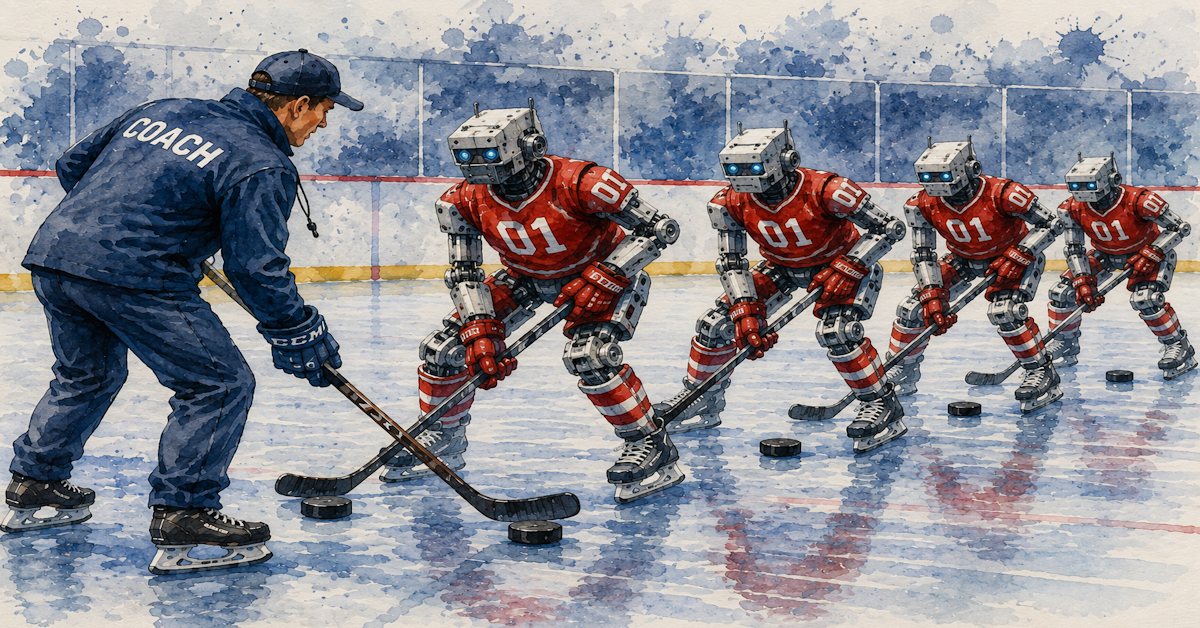
Hockey is a game filled with changing situations. Every shift presents new challenges. Opponents move differently, passing lanes open and close, and scoring opportunities appear for only a split second. A player who has learned to read the game can quickly adjust to these situations. A player who depends on constant instructions often hesitates because they are looking for answers from someone else instead of trusting their own instincts. Smart hockey players process information faster because they have been given opportunities to make decisions during practices instead of simply following directions.
One of the best ways to develop hockey IQ is by asking questions instead of always giving answers. After a drill, a coach might ask, “Why did that passing lane open?” or “What made that scoring chance successful?” Players who explain their own thinking begin to understand the game at a much deeper level. This style of coaching encourages learning rather than memorization. It also helps players remember lessons longer because they discovered the answers themselves instead of simply hearing them from a coach.
Practice design also plays a huge role in developing smarter hockey players. Traditional drills often have every movement planned from start to finish. Players skate to one cone, pass to another player, shoot, and return to the line. While these drills can help build basic skating and puck handling skills, they do very little to improve decision-making. Adding small-area games, competitive drills, and game-like situations forces players to read defenders, find open ice, support teammates, and react naturally. These situations closely resemble real hockey games and prepare athletes for what they will actually face during competition.
Mistakes are another important part of learning. Many young players become afraid to make errors because they know a coach will immediately stop the drill or point out every mistake. Unfortunately, fear often leads to hesitation, and hesitation usually creates even more mistakes. Smart coaches understand that errors are often valuable teaching moments. Instead of correcting every small mistake immediately, they sometimes allow players to work through the problem themselves. This builds confidence, creativity, and resilience. Players learn that making mistakes is not failure. It is simply part of becoming a better hockey player.
Parents also have an important role in developing hockey intelligence. After games, many parents immediately begin analyzing every shift their child played. Although these conversations usually come from a place of love and support, they can sometimes overwhelm young athletes. Instead of giving a long list of corrections, parents can ask simple questions like, “What did you feel went well today?” or “What was the hardest situation you faced?” These conversations encourage players to think critically without feeling criticized. They also help young athletes become more responsible for their own development.
Communication during games is another area where less can sometimes accomplish more. It is common to hear coaches shouting nonstop from the bench throughout every shift. While occasional reminders are helpful, constant instructions can actually distract players from reading the play. Instead of focusing on the puck, teammates, and opponents, players begin listening for directions. Eventually they stop making their own decisions altogether. Coaches who limit their bench communication often discover that players become more aware, more confident, and better at solving problems on the ice.
Video review can also become an excellent teaching tool when used correctly. Instead of pointing out every mistake, coaches can pause the video and ask players what they notice. Players often identify passing options, defensive coverage, or missed opportunities on their own. This interactive approach improves hockey awareness far more than simply lecturing. Players who actively study the game become better at recognizing similar situations during live competition.
Developing hockey sense also means allowing creativity. Some of the best players in the world became successful because they experimented with new moves, unexpected passes, and creative solutions. If every player is expected to perform exactly the same way, creativity disappears. Coaches should encourage players to try different approaches during practice while still understanding team concepts. Creative players are often the ones who can break down tough defensive systems or create offense when nothing seems available.
Another valuable strategy is exposing players to multiple positions. A defenseman who occasionally plays forward gains a better understanding of offensive timing and scoring opportunities. A forward who spends time on defense learns better gap control, defensive positioning, and puck retrieval. Goalies can also benefit from understanding breakout patterns and offensive systems. This broader understanding helps every player see the entire game instead of viewing it from only one perspective.
Building smarter hockey players also requires patience. Hockey IQ develops over many years through thousands of game situations. There is no shortcut. Coaches who constantly chase wins at younger ages sometimes rely on rigid systems that limit player thinking. While this may produce short-term success, it can slow long-term development. Coaches who emphasize learning, decision-making, and problem-solving often see their players become more adaptable as they move into higher levels of competition.
Confidence is closely connected to independent thinking. Players who know they are trusted to make decisions usually play with greater poise under pressure. They recover from mistakes more quickly because they are not afraid of disappointing their coaches. Instead, they focus on making the next good decision. This confidence often carries into every part of the game, including skating, puck control, shooting, defensive play, and communication with teammates.
The ultimate goal of coaching is not to create robots who simply follow instructions. It is to develop players who can recognize situations, communicate with teammates, adapt to changing conditions, and make smart choices at full speed. Hockey is simply too fast for constant outside direction. The smartest players become leaders because they understand the game, anticipate what will happen next, and confidently respond to whatever challenge appears. Coaches who teach players how to think instead of what to think are helping prepare them for success not only in hockey but also in school, work, and everyday life.
Every coach, parent, and player has probably experienced moments when too much instruction became confusing or when allowing a little more freedom led to surprising growth. We’d love to hear your thoughts. Share your own experiences, coaching ideas, or observations in the Comments below to help keep the conversation growing.
